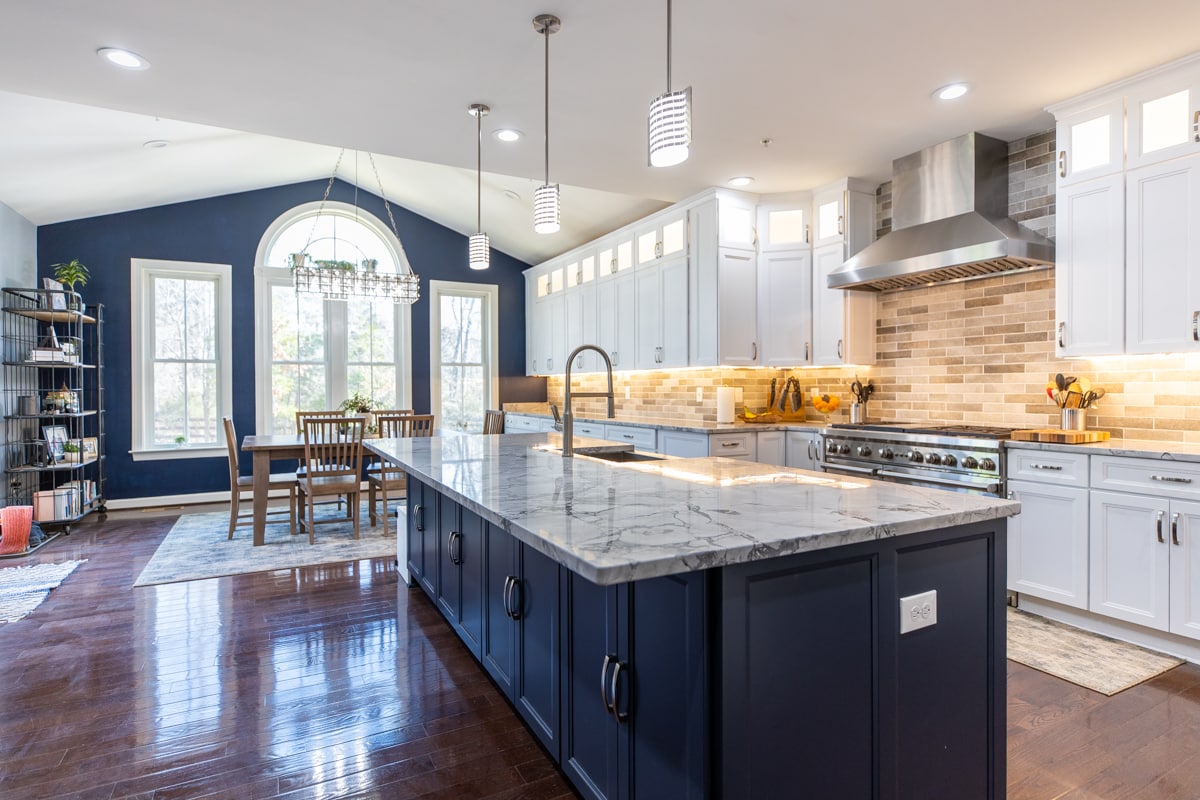

Quartz vs Granite Countertops: Differences in Cost, Durability, and Maintenance
Comparing quartz vs. granite countertops is one of the largest decisions homeowners make when remodeling a kitchen. The surface you select affects your budget, daily routine, long-term upkeep, and even resale appeal.
Both materials are popular for good reason. Each offers durability, visual impact, and strong performance in a busy kitchen. The differences come down to how they’re made, how they hold up under real-life use, and what kind of maintenance you’re comfortable with over time.
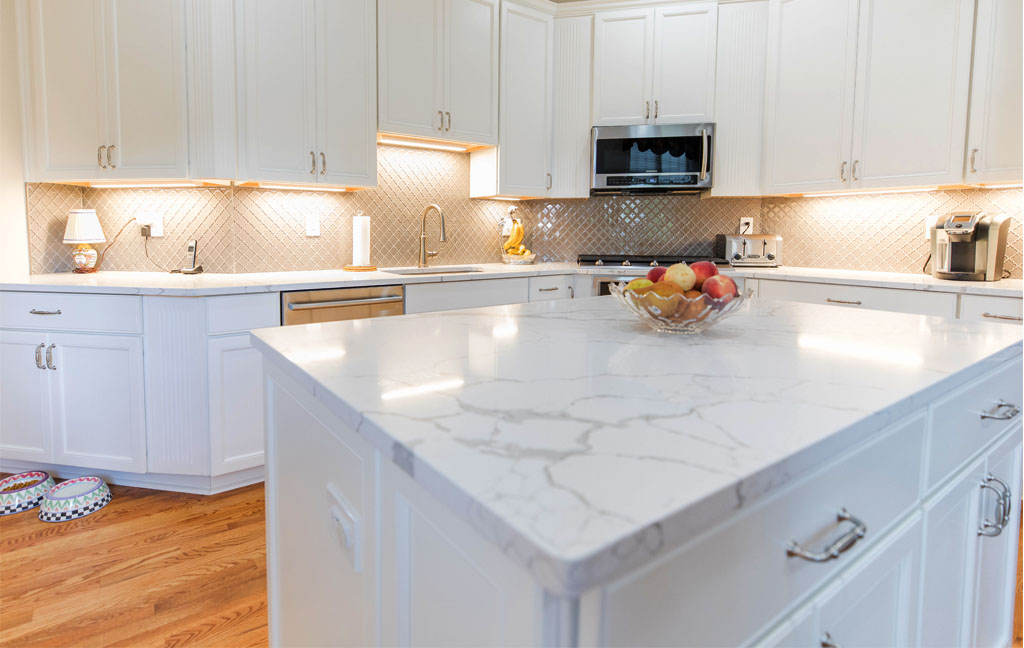
If you’re planning a kitchen remodel and weighing the real tradeoffs between them, here’s what you need to know.
What’s the Difference Between Quartz and Granite?
Granite is a quarried natural stone that’s fabricated into slabs and polished for installation. Every slab is distinct, with natural veining, mineral specks, and color variation that can’t be replicated.
Quartz countertops are engineered stone. Manufacturers combine crushed stone with resins and pigments to create a surface that’s more uniform in color and pattern.
That natural versus engineered distinction drives most of the differences homeowners notice in terms of cost, durability, and maintenance.
Quartz vs Granite Countertops Cost
When researching quartz countertops’ cost, many homeowners expect a dramatic price gap between materials. In reality, installed pricing often overlaps.
Typical Installed Cost Ranges
Nationally, both materials typically fall within similar broad ranges once fabrication and installation are included:
- Quartz: Commonly ranges from the mid-$50s into the $100s per square foot installed, with premium colors and dramatic veining pushing higher.
- Granite: Often starts in the mid-$40s per square foot installed and can exceed $100 for rare or exotic slabs.
Entry-level granite may cost less than quartz. Mid-range granite and popular quartz designs often land in similar price brackets.
What Actually Drives the Price
Material type is only part of the story. Several factors often influence your final quote more than choosing granite versus quartz:
- Slab tier and rarity
- Edge profile choice
- Total cutouts for sinks or cooktops
- Waterfall edges or full-height backsplashes
- Island size and seam placement
- Access challenges, especially in DC rowhomes or condos
Homeowners in Northern Virginia and Washington, DC, often see prices at the upper end of national averages due to labor rates and installation logistics.
A detailed estimate during a full kitchen remodel provides the clearest picture, especially when countertops are part of a larger scope that includes cabinetry, layout changes, and lighting upgrades.
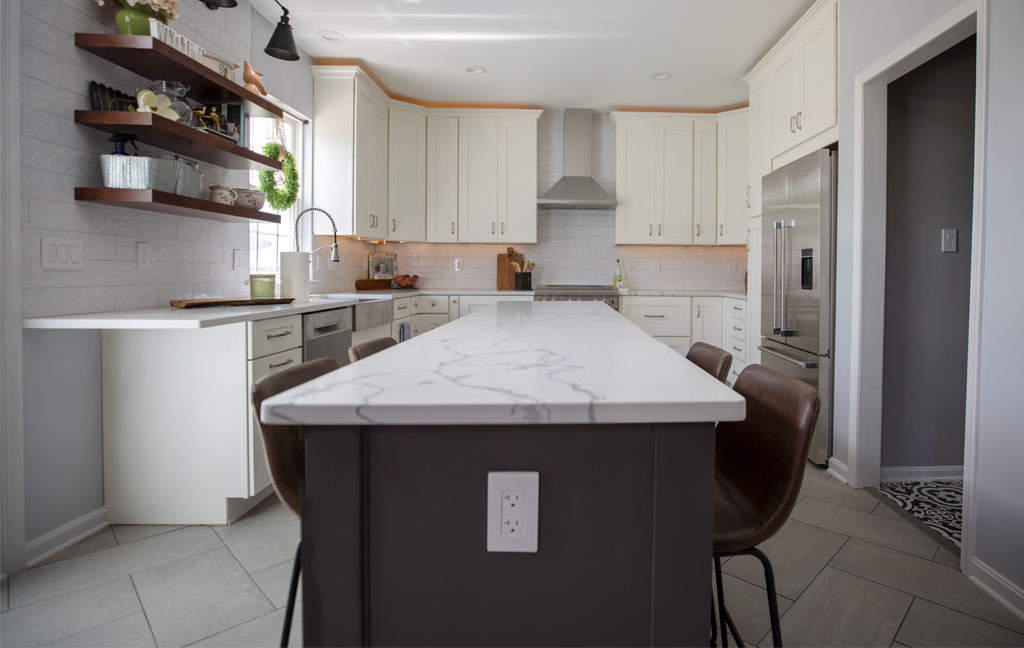
If you’re already planning a renovation, reviewing options with a design team during a comprehensive kitchen remodeling consultation helps align material choice with overall budget priorities.
Countertop Durability Comparison
Durability is often the deciding factor when evaluating the best countertop for kitchen use. Daily cooking habits, household traffic, and maintenance preferences all matter.
Stain Resistance
Quartz is effectively non-porous, meaning no sealing is required and it resists staining from everyday spills such as wine, oil, and coffee. Many homeowners appreciate the simplicity of wiping and moving on.
Granite is naturally moisture-resistant, but slab-to-slab variation exists, and some stones benefit from sealing to enhance stain resistance. It’s not necessary to seal granite countertops frequently; many last for years before needing resealing.
Homeowners who want predictable stain performance often gravitate toward quartz. Those comfortable with periodic sealing may find granite equally manageable.
Heat Resistance
Heat is one of the clearest functional differences in a countertop durability comparison.
Granite tolerates heat well. Placing a warm pan briefly on the surface typically won’t cause damage, though using trivets is still smart practice.
Quartz contains resins, which can be sensitive to high or prolonged heat. Direct contact with a hot pan may discolor or damage the surface. Habitual use of trivets or hot pads becomes more important with quartz.
Frequent cooks who move pots directly from the stovetop to the counter often prefer granite’s heat tolerance.
Scratch Resistance
Both materials are considered durable for everyday kitchen tasks. Neither is scratch-proof. Cutting directly on either surface can leave marks and dull knives.
A simple rule applies to both: use a cutting board.
Chips and Impact
Edges are the most vulnerable areas for both quartz and granite. Corners, sink rails, and unsupported overhangs see the most impact.
Granite edges can chip, but a stone professional can often repair the damage and blend it in cleanly. Quartz can chip as well, especially with a sharp impact on the corners.
Edge profile selection and proper support play a larger role in chip risk than many homeowners realize. Discussing these details during design planning reduces future issues.
Granite Countertops Maintenance vs Quartz Maintenance
Homeowners often compare the two materials based on their daily needs and maintenance expectations.
Quartz Maintenance
Quartz is often considered low maintenance because it cleans easily and doesn’t require special upkeep for everyday use.
Daily cleaning typically uses mild soap and water with a soft cloth; abrasive cleaners and harsh chemicals should be avoided. Heat protection habits matter because hot cookware and appliances can still damage the surface over time.
There’s no sealing required, making it a convenient fit for busy households with limited time for upkeep.
Granite Countertops Maintenance
Granite cleaning is also straightforward. A pH-neutral cleaner or mild dish soap with water is generally recommended.
Regular use of acidic cleaners, such as vinegar or lemon-based products, should be avoided over time.
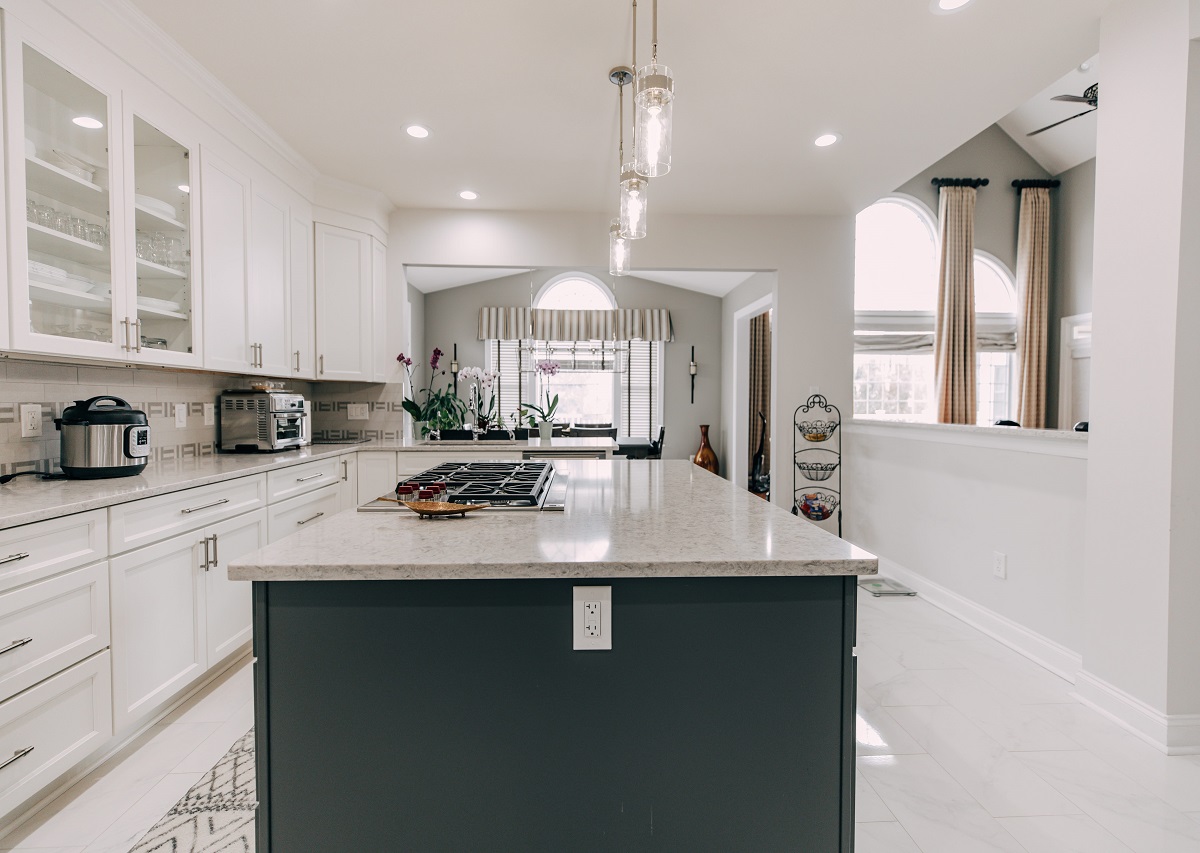
Sealing may be recommended based on the specific stone and household use. Many granite countertops don’t require frequent sealing, though some benefit from periodic resealing. A quality sealer can last for years before reapplication is needed.
Maintenance for granite isn’t complicated, but it may involve an occasional extra step compared to quartz.
Lifestyle Considerations: Which Surface Fits Your Kitchen?
Material selection should match how your household actually uses the space day-to-day, not just how it looks in a showroom.
Quartz May Make Sense If You:
- Prefer minimal ongoing upkeep
- Want a consistent pattern and color
- Feel anxious about staining
- Love the look of marble but want easier care
Quartz also remains highly popular in industry trend reports, which can support resale value in many markets.
Granite May Make Sense If You:
- Value natural variation and one-of-a-kind slabs
- Frequently place warm cookware on counters
- Appreciate the authenticity of natural stone
- Don’t mind occasional sealing if recommended
Outdoor kitchen plans typically favor granite, since prolonged UV exposure can affect quartz over time.
Design and Seam Planning
Dramatic veining in both quartz and granite requires thoughtful seam placement. Different elements, including vein direction, island size, and slab layout, all influence the final look.
Working with a design-build remodeling team helps coordinate countertop selection with cabinetry, backsplash tile, and lighting so the entire kitchen feels cohesive.
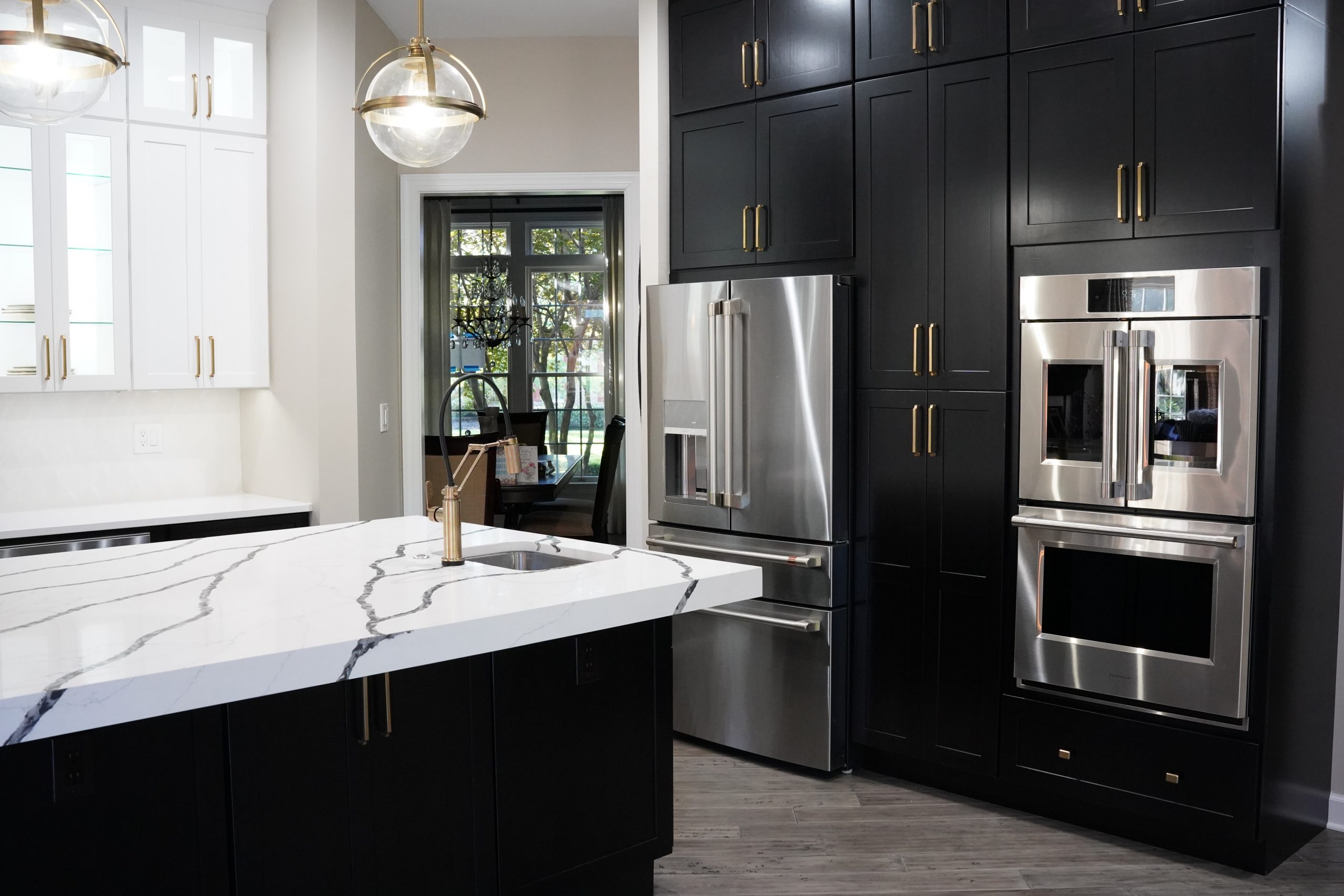
During a full kitchen renovation, countertops should be selected in coordination with cabinet color, hardware finishes, and your choice of flooring. Seeing slabs in person and reviewing digital layouts helps avoid any surprises later on.
So, What’s the Best Countertop for Kitchen Remodeling?
No single answer works for every household. Homeowners who prioritize simplicity and uniformity often prefer quartz, while those who value natural stone and want strong heat tolerance may lean toward granite.
Budget overlap between the two means lifestyle and maintenance comfort often matter more than price alone.
The most informed decision happens when countertops are considered as part of a larger remodeling plan. Various elements, including layout changes, island size, sink placement, and cabinetry upgrades, all influence material performance and cost.
Choosing the Right Countertop for the Way You Actually Live
If you’re comparing quartz vs. granite countertops for an upcoming remodel in Northern Virginia or Washington, DC, viewing full slabs in a showroom and discussing real usage habits with a design team can clarify the right fit.
A kitchen renovation is an investment in how you live every day. Selecting the right surface means balancing durability, maintenance, and design goals in a way that suits your household.
Curious to learn more? Check out our past projects or review our countless customer testimonials for more information and feedback about our work.
Ready to take the next step? Book a consultation with Virginia Kitchen & Bath to review countertop options alongside a comprehensive kitchen remodeling plan that’s customized to your home and budget.