

Your Guide To Kitchen Countertop Materials in 2026
What to consider when choosing kitchen countertop materials
Some of the most significant remodelling decisions you face are connected to the most important room in the house: your kitchen. While the kitchen cabinets are likely to bear the biggest price tag, the countertops dictate much of the daily functionality, maintenance, durability, and aesthetic appeal of the space. That means it is important to choose the best kitchen countertop material for your home.
Types of Kitchen Countertop Materials
Naturally, not all types of countertops are equal. Countertops can be crafted from different materials, both natural and man-made. The materials range in price to suit any kitchen remodelling budget. And each type of kitchen countertop has its benefits along with its potential drawbacks.
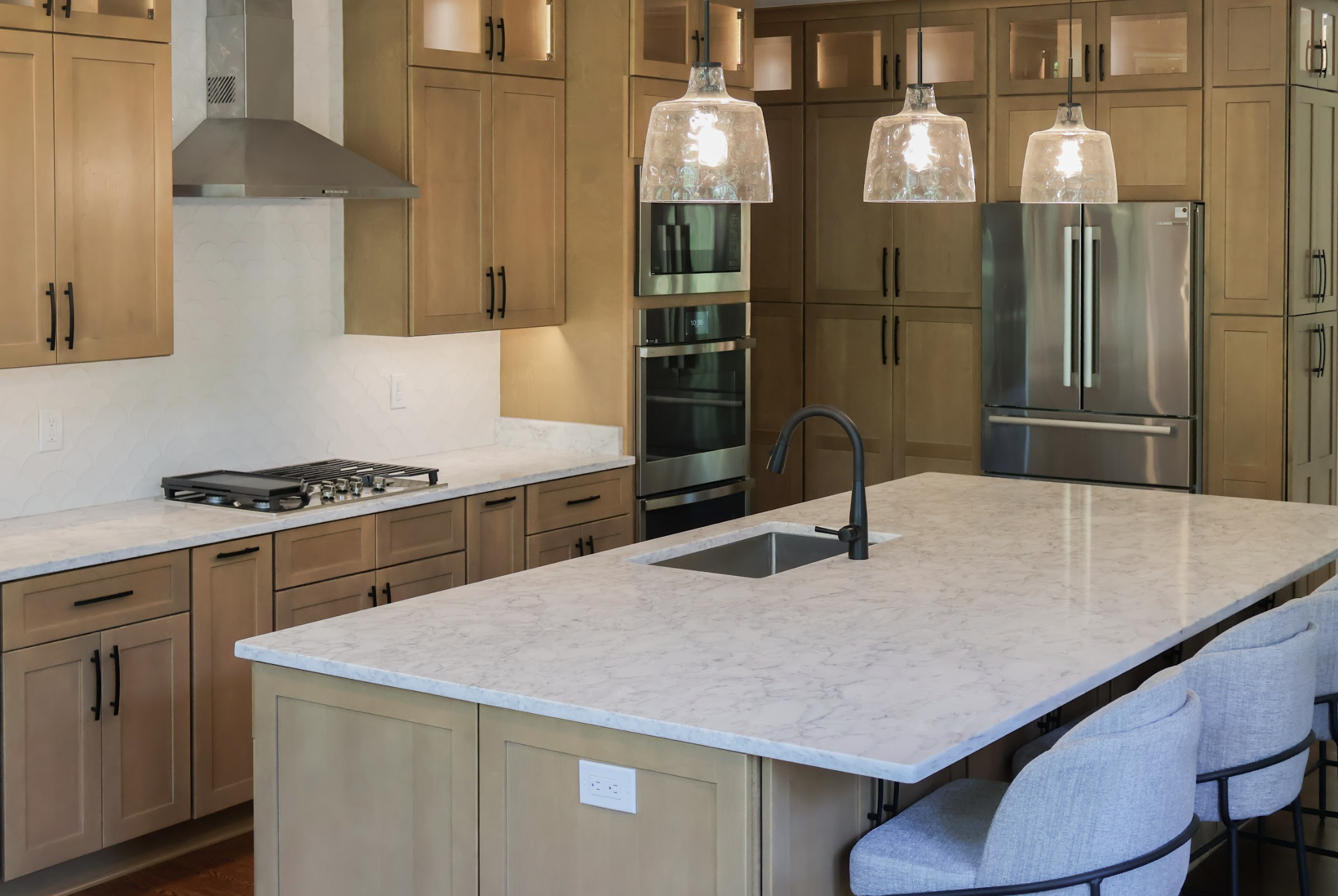
The most recent trends in kitchen design seem to show a preference for warm neutral themes, low-sheen finishes, and the natural rhythmic movement of organic materials – the veins coursing through granite and marble or the grain in blocks of wood. Integrated designs with a seamless transition from countertops to backsplashes to sinks seem to be gaining popularity as well.
Common countertop materials, each suited in some way to these recent trends, fall generally into one of five categories:
-
Natural Stone
Natural stone countertops are made from organic, naturally-formed types of stone. They are quarried directly from the ground and then precisely cut and polished. Examples of natural stone countertops include granite, marble, and quartzite. Less common varieties (although on the rise) include soapstone, limestone, travertine, slate, onyx, and even porcelain kitchen countertops (which are no longer relegated merely to a bathroom remodel).
-
Engineered Stone
Engineered stone countertops are made of crushed natural stone mixed with resin to create a durable and low-maintenance surface. Unlike true natural stone, these modified stone materials tend to be non-porous. Pigment can be added to create a wider range of colors. Quartz countertops tend to be the most common type. Engineered marble, porcelain, and sintered stone (crushed natural minerals that are placed under intense heat, electricity, and pressure in a process known as “sintering”) are also examples of engineered stone countertops.
-
Solid Surface
Anyone familiar with Corian, the popular (and original) brand of composite solid surface countertop material from DuPont, understands that this type of countertop is known for its durability and ease of maintenance. Solid surface countertop materials are composed of acrylic or polyester resins mixed with mineral fillers. And while Corian is perhaps the most common, other brands offer similar products.
-
Wood
Some homeowners appreciate the warm, organic textures of natural wood surfaces. These can be made from any number of species – oak, walnut, maple, cherry, or bamboo, for example – and can feature either a finished or a “live” edge depending on the desired aesthetic. “Butcher block” construction styles are also popular.
-
Laminate
Laminate countertops are made by adhering a bonded layer of plastic, resin, and paper over an engineered wood core. The thin plastic laminate shell of the countertop is fairly durable and comes in an enormous range of colors and patterns, even mimicking expensive materials like marble or granite for far less money. Laminates are fairly easy to work with compared to some other countertop options.
There are other specialty materials that are used for countertops as well. For instance, stainless steel countertops are making a comeback. Countertops can be made of concrete or even recycled glass. But most choices today seem to revolve around these five general categories.
How To Choose a Kitchen Countertop Material
What is important when it comes to choosing which kitchen countertop is right for you? Each type of material has its upside and its unique challenges. Natural stone, for example, is extremely durable, but because it tends to be porous, it needs periodic maintenance to seal the pores. Quartz is extremely versatile from a design perspective, and it is durable. It also resists stains but is susceptible to heat. Both are beautiful. Both can be expensive.
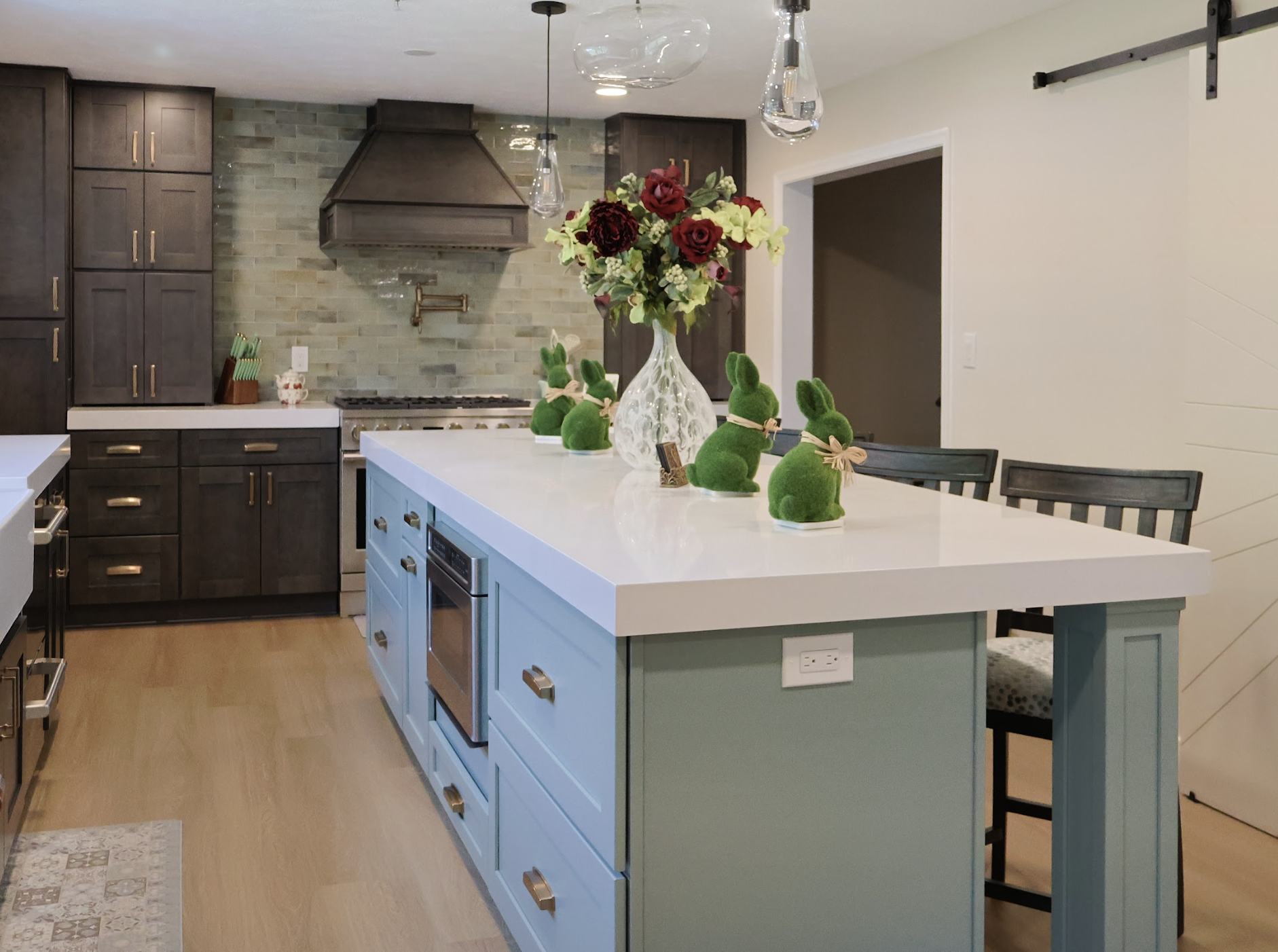
When choosing a material for your countertops, think about the following characteristics:
-
Aesthetics – Each type of material lends a unique look and feel to your kitchen remodel. Quartz, with its wide-vein patterns, offers a luxurious and often dramatic appeal. Wood has a more warm and earthy feel that can be equally comfortable in a modern or rustic environment.
-
Care and Maintenance – Paying premium prices for a countertop material does not insure that you will have zero maintenance to perform. In fact, price alone does not prescribe the amount of care and maintenance needed. Granite and other natural stone premium products need occasional sealing. Wood needs refinishing from time to time. Quartz needs little maintenance, but if you scratch it, removing the scratch can be difficult.
-
Usage – What you mean to ask from your kitchen countertops can also influence your selection. Are you more interested in functionality – durability, heat resistance, and the like – or visual appeal? Some materials are better suited as working surfaces than others. And are installing the countertops for personal use over the long haul or for resale? If you like a certain material for yourself, great. But if you are looking to sell your home, maybe a better choice is a surface with wide appeal and the potential to increase home value.
Seven Common Kitchen Countertop Materials
A quick search will reveal dozens of different kinds of countertops are on the market, including exotic specialty products imported from far away places. And new varieties are introduced all the time. That said, some materials are relatively common and are installed regularly. Each of these are suited to today’s consumer trends. Consider these seven types of kitchen countertop materials and the benefits and challenges of each:
- Granite
Granite is a natural stone surface that is cut and polished into just the right size and shape for your kitchen. Each slab of granite is unique. Advantages of granite include stain, heat, and scratch resistance. Granite is very durable. Like other natural stones, it requires little to no processing with chemicals (compared to engineered products) and therefore limited chemical exposure. And the natural variations in the stone offer a beautiful and elegant appearance.On the other hand, granite requires regular sealing to prevent bacteria and stains from sinking in. It is also very heavy, difficult to install, and is not really a suitable cutting surface.
- Marble
Marble comes across as more of a luxury surface than granite to some people. As with granite, each slab of this natural stone is unique. Marble is highly heat resistant and tends to stay cool to the touch, but it is softer than granite. It is also more porous and prone to staining and requires more maintenance, more frequent sealing. And scratches can be difficult to remove. Marble tends to develop a patina over time.
- Quartzite
This natural stone is very scratch-resistant, even more so than granite. It is just as porous, so it needs to be sealed annually to prevent stains from soaking in. Like glass, quartzite can be prone to etching from acids. The durability, heat resistance, UV resistance to fading, and marble-like beauty make this surface a fine addition to a kitchen, although at a higher price than most other options.
- Quartz
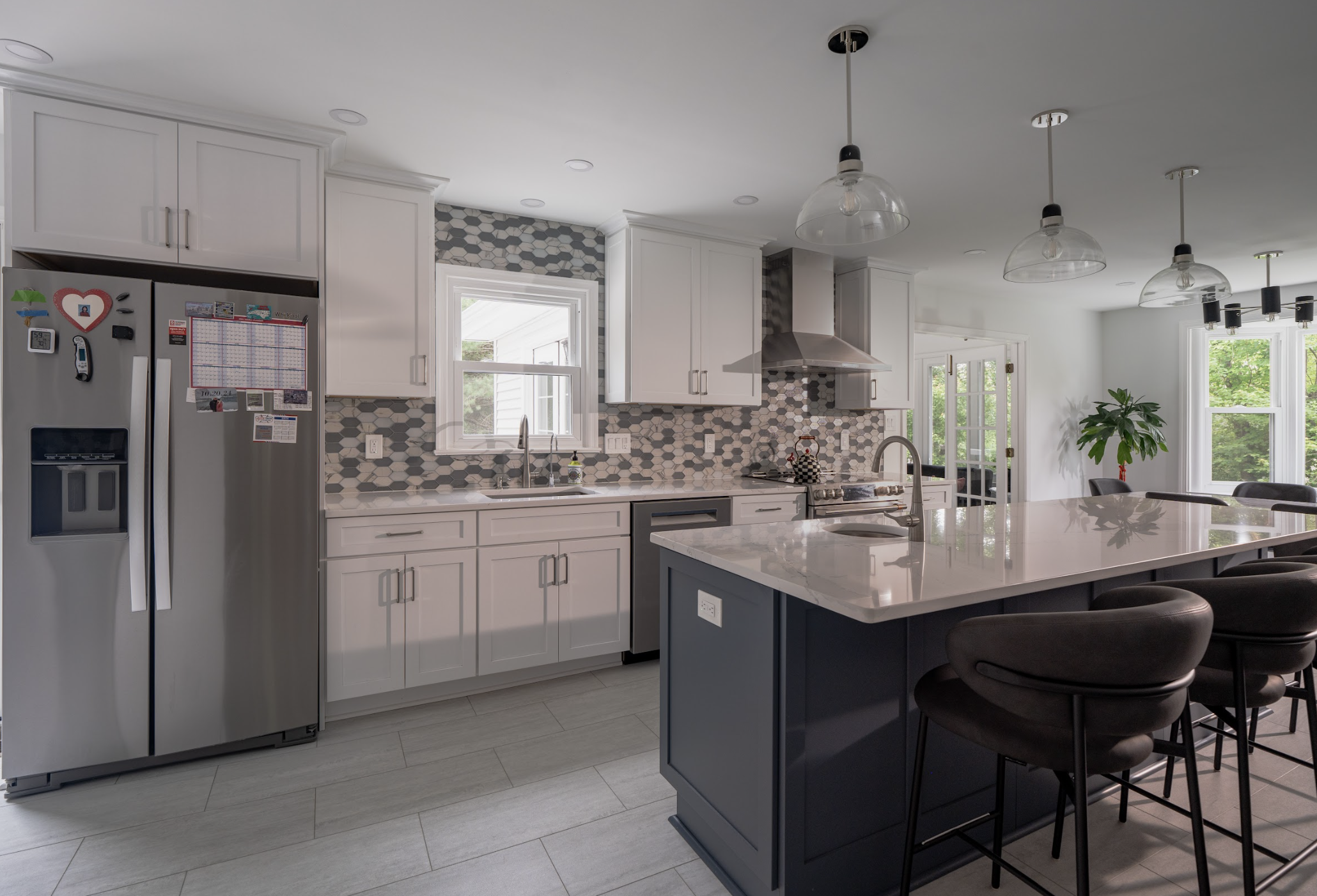
Quartz is the engineered, man-made version of Quartzite. It shares many of the same characteristics – hard and durable with a similar aesthetic – although quartz is more consistent in its appearance and available in a wide range of colors. Because quartz is engineered, it has far less problem with staining, chipping, and scratching and does not require the same maintenance as natural stone. But it does not do so well with heat. A hot pan can damage the resin and polymer fillers.
- Natural Wood
Wood surfaces are sensitive to water damage and therefore require regular maintenance, whether that be sealing, staining, or oiling. They are also prone to scratching, denting, and scorching. Not to mention high quality wood countertops can be expensive. But the tradeoff is worth it for many homeowners. That traditional, rustic appeal and the warmth of the organic wood grain lend an organic beauty that is unmatched by other products.
- Solid Surface
This type of engineered composite countertop is extremely durable. It is non-porous and offers a hygienic surface. Since it is made to specifications, there are no visible seams (including on the molded sink), and the material is available in a wide range of colors and patterns. And the cost of solid surface countertops falls below that of most natural and engineered stone products. They are easy to repair, easy to maintain, and can be repaired easily when scratched. That said, because solid surface countertops are softer than stone, they are more sensitive to scratching and chemicals. And they are not very heat resistant. They do not bear the organic “natural” feel of stone or wood, therefore are not always considered among the more “high end” products available.
- Laminate
This budget-friendly countertop option is found in many new builds and remains a solid option for remodeling projects, even for DIYers. Pros include affordability, ease of installation, relatively low maintenance, durability, and variety. But laminates are very sensitive to heat and scratching. They often are installed in such a way that there are visible seams. They are prone to damage from impact. And, although laminates mimic the look of pricier materials, they are viewed at the bottom end in terms of luxury and style.
Home ownership comes with a whole lot of choices. Whether you are building, buying, or remodeling your home, it helps to have a trusted partner assist you with planning and installation. Virginia Kitchen & Bath offers expert consultation and kitchen remodelling services to help bring your dream kitchen to life.